
Triton (Pearson)
I have this for saleEmbed the Triton (Pearson) specs
Show an always up-to-date spec card on your site. Paste the code into your page's HTML; keep the link below the card, so visitors can find the full specifications.
Spec card
Image instead
A static image of the main specs, linked to this page. Works where iframes are not allowed.
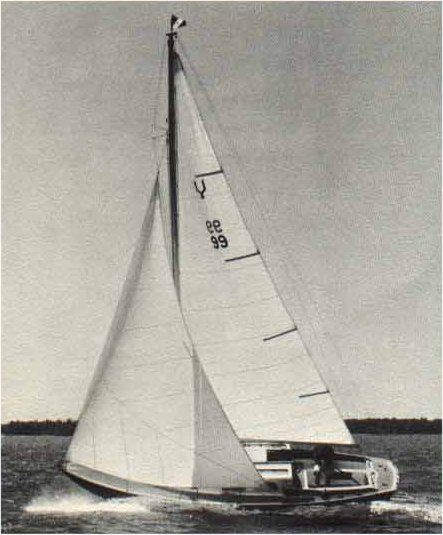
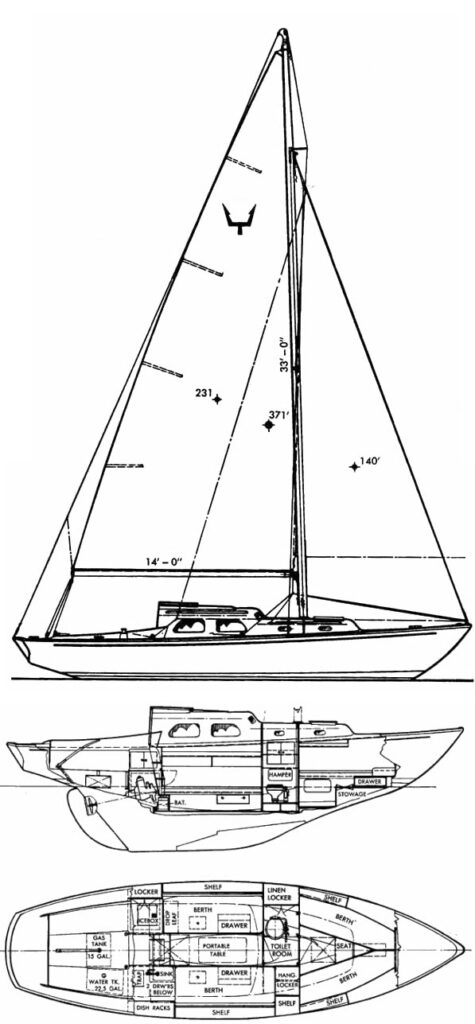
General Information
Dimensions
Weight & Ballast
Sail Plan
Engine & Systems
Performance Ratios
On the numbers, Triton (Pearson) rates as moderate (SA/D 16.4) and heavy (D/L 311). Its comfort ratio of 27.4 is in the "coastal cruiser" band; its ballast/displacement ratio of 43.6% is in the "high" band. Against its peers, Capsize screening stands out: lower than 87% of the 1696 monohulls between 7.8 m and 9.5 m in our catalogue.
Ratios use published displacement (often light ship) and reported sail area; see Sources & methodology.
SA/D 16.4 — moderate. Lower than 59% of the 1007 monohulls between 7.8 m and 9.5 m in our catalogue. Sail area relative to displacement: the higher the number, the more sail the boat carries for its weight, which means more power in light air.
Ballast/Disp 43.6% — high. Higher than 69% of the 1498 monohulls between 7.8 m and 9.5 m in our catalogue. The share of the boat's weight that is ballast: a higher share generally means a stiffer boat that stands up better to its sail area.
D/L 311 — heavy. Higher than 84% of the 1651 monohulls between 7.8 m and 9.5 m in our catalogue. Displacement relative to waterline length: low numbers mean a light boat that accelerates and planes easily, high numbers a heavy boat that carries its weight through a seaway.
Comfort ratio 27.4 — coastal cruiser. Higher than 84% of the 1650 monohulls between 7.8 m and 9.5 m in our catalogue. An estimate of motion comfort in waves from displacement, beam and length: higher values suggest a slower, gentler motion.
Capsize screening 1.73 — meets the common offshore guideline. Lower than 87% of the 1696 monohulls between 7.8 m and 9.5 m in our catalogue. A screening formula from beam and displacement: lower is better, and values under 2.0 are the common guideline for offshore boats.
S-number 1.6. Lower than 84% of the 998 monohulls between 7.8 m and 9.5 m in our catalogue. A stability number combining hull form and ballast: higher values indicate better stability and sea-keeping.
Notes
This was the first boat (other than dinghys) built by Pearson Yachts and one of the most successful. 150 were also built by Aeromarine in Sausalito, CA. An undetermined number were also built under license by Jouet in France. The Pearson Tritons were built with wood trim and coamings, while the Aeromarine Tritons are all fiberglass and a masthead rig. (Sailplan was changed a number of times for all versions.)
Similar boats
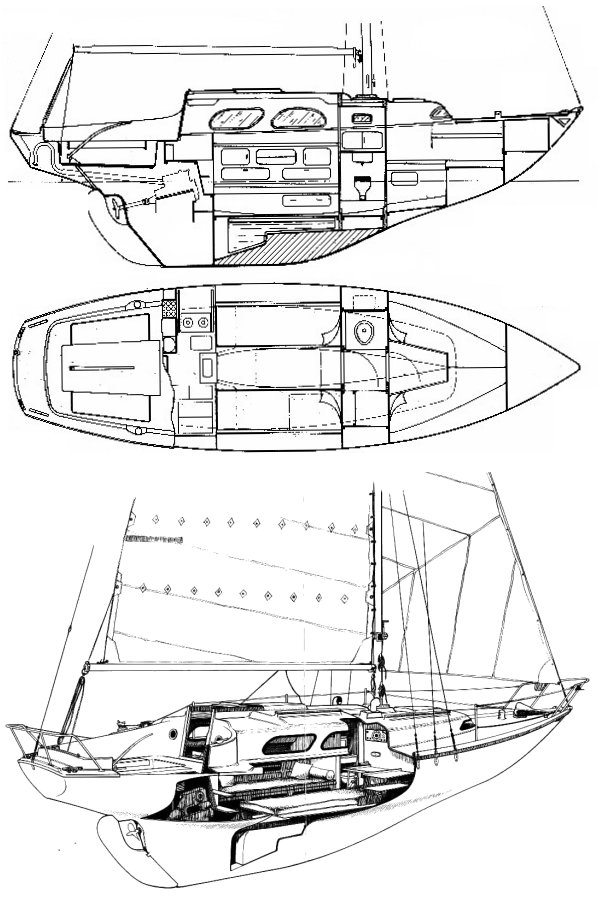
Triton (Jouët)
Jouet
Same length, 1% lighter · Compare
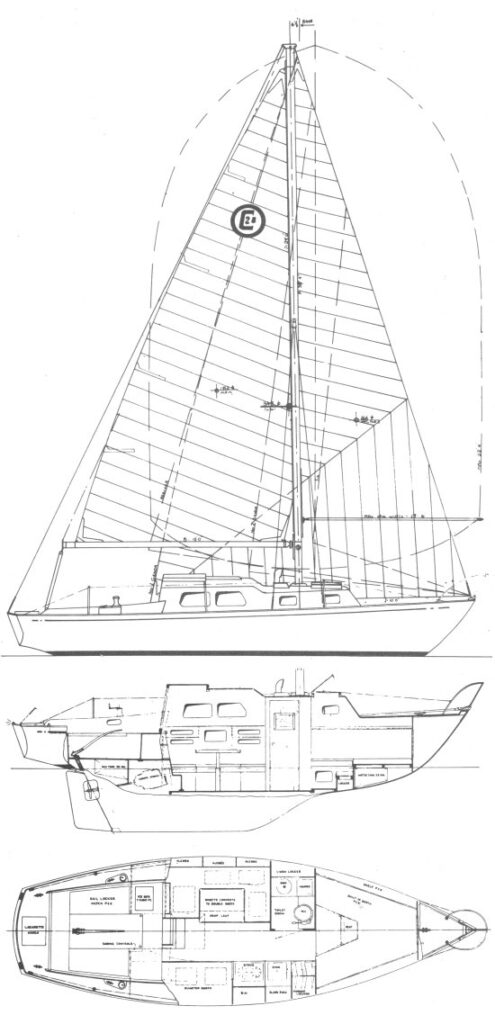
Corinthian 28
Olympic Yachts Ltd.
0.2 m shorter, 1% lighter · Compare
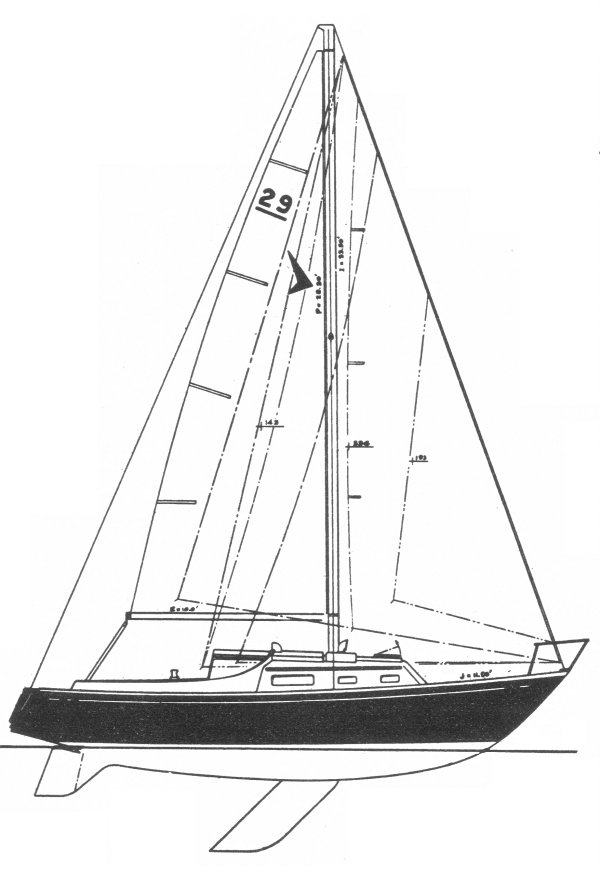
Seafarer 29 CB
Seafarer Yachts
0.1 m longer, 4% lighter · Compare
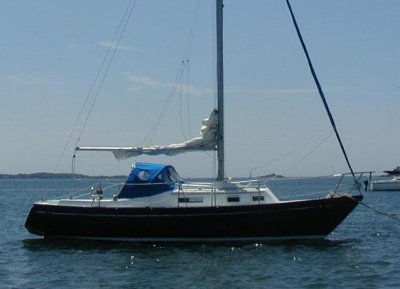
Seafarer 29
Seafarer Yachts
0.1 m longer, 5% lighter · Compare
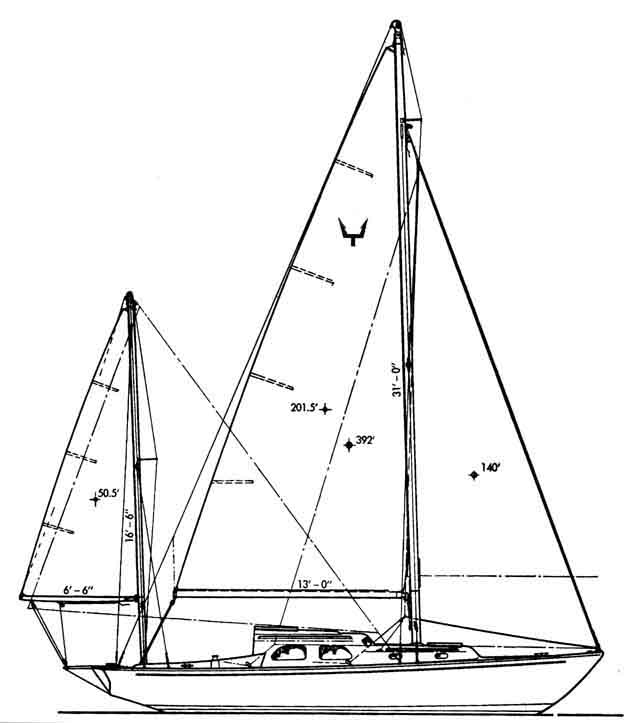
Triton (Pearson) Yawl
Pearson Yachts
Same length, similar displacement · Compare
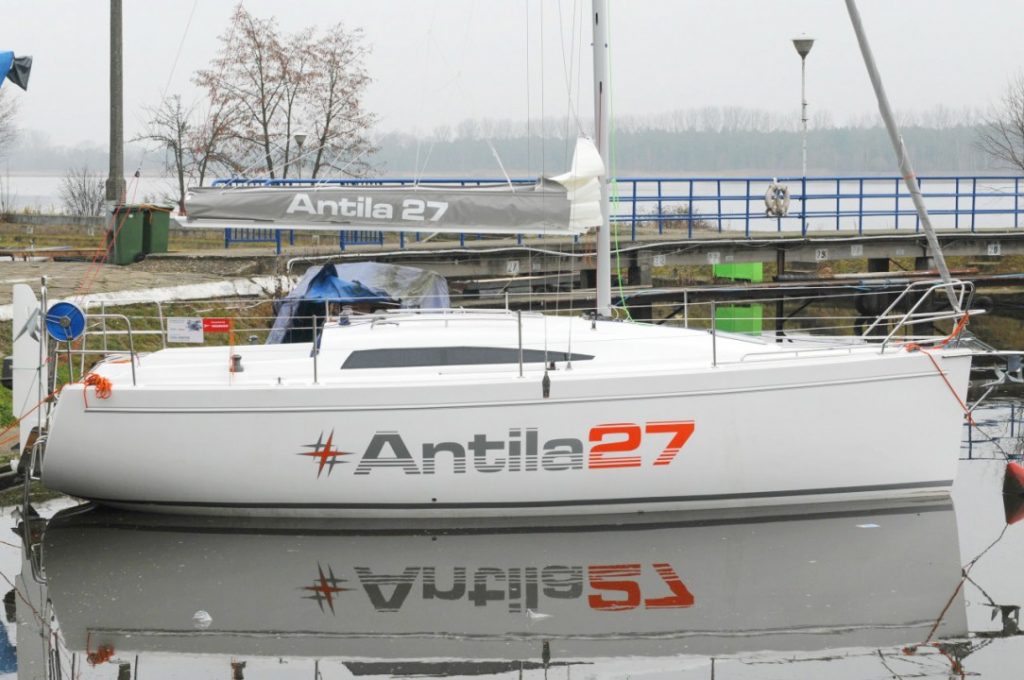
Antila 27
Antila Yachts
0.2 m longer, 2% heavier · Compare
Improve this page: add photos, a price or your experience
Sign in to upload photos of this yacht.
Know what one sold for? Sign in to add a price →
Own or sailed one? Share your experience →