
Star (International)
I have this for saleEmbed the Star (International) specs
Show an always up-to-date spec card on your site. Paste the code into your page's HTML; keep the link below the card, so visitors can find the full specifications.
Spec card
Image instead
A static image of the main specs, linked to this page. Works where iframes are not allowed.
General Information
Dimensions
Weight & Ballast
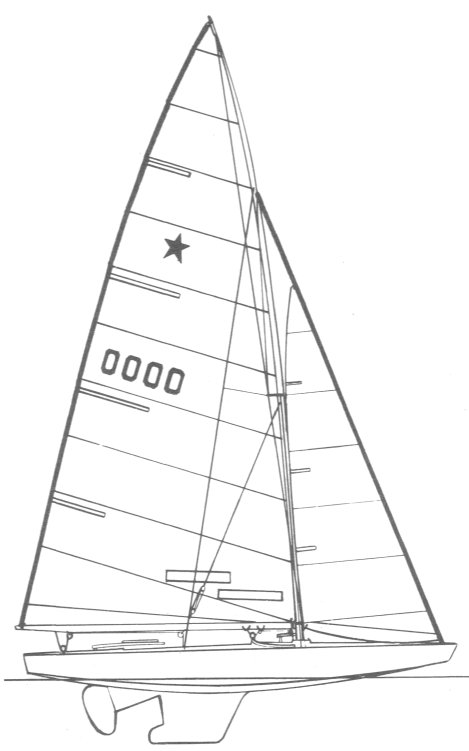
Sail Plan
Performance Ratios
Its capsize screening value of 2.00 is in the "above the guideline" band. Against its peers, Capsize screening stands out: lower than 81% of the 1025 monohulls between 6.2 m and 7.6 m in our catalogue.
Ratios use published displacement (often light ship) and reported sail area; see Sources & methodology.
Capsize screening 2.00 — above the guideline. Lower than 81% of the 1025 monohulls between 6.2 m and 7.6 m in our catalogue. A screening formula from beam and displacement: lower is better, and values under 2.0 are the common guideline for offshore boats.
Notes
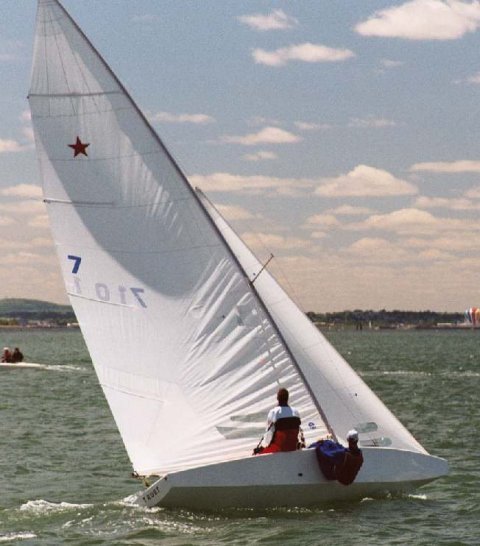
The STAR, among the most prestigious, competitive, and enduring one-design classes, was first selected for the Olympic games in 1932 and continued in that role until 2012. Supported by a worldwide association, the STAR as a class has been one of the best organized in sailing, with more than 7,500 yachts built over its 100 year history.
More from Abeking & Rasmussen
Similar boats
Spider 22
GLass Yachts (AUSTRALIA)
0.1 m shorter, similar displacement · Compare
Columbia 21
Columbia Yachts
0.3 m shorter, 1% heavier · Compare
Islander 23 (Crealock)
Wayfarer Yacht Corp.
0.1 m longer, 5% lighter · Compare

Martin 243
Martin Yachts
0.4 m longer, 2% lighter · Compare
Luders 21
Ron Rawson Inc./ American Plastics Inc.
0.4 m shorter, 1% heavier · Compare
Improve this page: add photos, a price or your experience
Sign in to upload photos of this yacht.
Know what one sold for? Sign in to add a price →
Own or sailed one? Share your experience →