
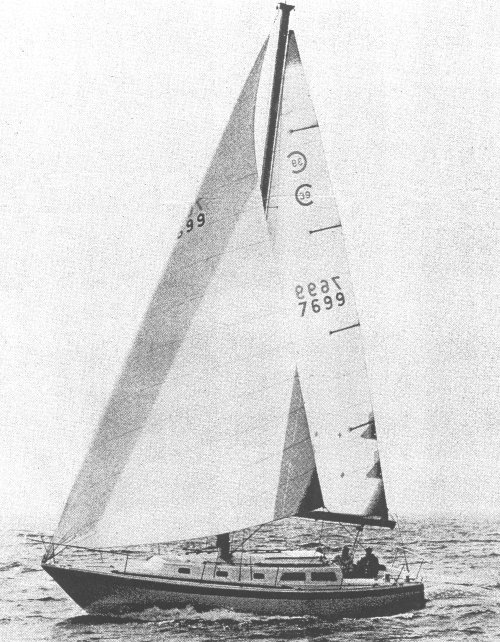
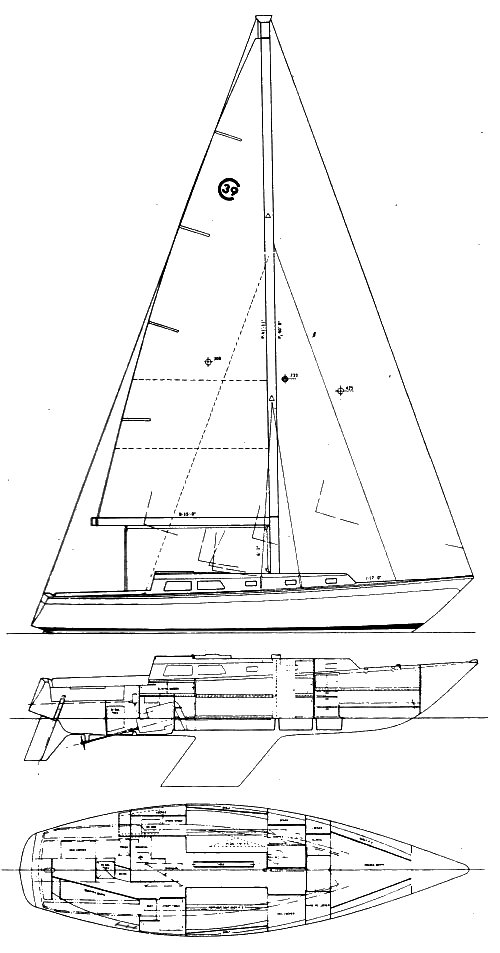
Cal 39
I have this for saleEmbed the Cal 39 specs
Show an always up-to-date spec card on your site. Paste the code into your page's HTML; keep the link below the card, so visitors can find the full specifications.
Spec card
Image instead
A static image of the main specs, linked to this page. Works where iframes are not allowed.
General Information
Dimensions
Weight & Ballast
Sail Plan
Engine & Systems
Performance Ratios
On the numbers, Cal 39 rates as moderate (SA/D 19.8) and moderate (D/L 214). Its comfort ratio of 25.6 is in the "coastal cruiser" band; its ballast/displacement ratio of 45.2% is in the "high" band. Against its peers, Ballast/Disp stands out: higher than 83% of the 1700 monohulls between 10.6 m and 13.0 m in our catalogue.
Ratios use published displacement (often light ship) and reported sail area; see Sources & methodology.
SA/D 19.8 — moderate. Higher than 79% of the 1234 monohulls between 10.6 m and 13.0 m in our catalogue. Sail area relative to displacement: the higher the number, the more sail the boat carries for its weight, which means more power in light air.
Ballast/Disp 45.2% — high. Higher than 83% of the 1700 monohulls between 10.6 m and 13.0 m in our catalogue. The share of the boat's weight that is ballast: a higher share generally means a stiffer boat that stands up better to its sail area.
D/L 214 — moderate. Lower than 61% of the 1872 monohulls between 10.6 m and 13.0 m in our catalogue. Displacement relative to waterline length: low numbers mean a light boat that accelerates and planes easily, high numbers a heavy boat that carries its weight through a seaway.
Comfort ratio 25.6 — coastal cruiser. Lower than 61% of the 1870 monohulls between 10.6 m and 13.0 m in our catalogue. An estimate of motion comfort in waves from displacement, beam and length: higher values suggest a slower, gentler motion.
Capsize screening 1.91 — meets the common offshore guideline. Higher than 53% of the 1894 monohulls between 10.6 m and 13.0 m in our catalogue. A screening formula from beam and displacement: lower is better, and values under 2.0 are the common guideline for offshore boats.
S-number 2.9. Higher than 66% of the 1225 monohulls between 10.6 m and 13.0 m in our catalogue. A stability number combining hull form and ballast: higher values indicate better stability and sea-keeping.
Notes
This, the first of several CAL 39's, was introduced just before the adoption of the IOR, (replacing the CCA rule) which may have caused sales to falter in the first year. It was soon replaced with another version, the CAL 39 MII (1979), an entirely new design, also by Lapworth, and one that, presumably, the rule treated more kindly.
More from Jensen Marine
Similar boats
C&C 38-3
C&C Yachts
0.3 m shorter, 2% lighter · Compare
Finnyacht 381
Finnyacht
0.2 m shorter, 1% heavier · Compare
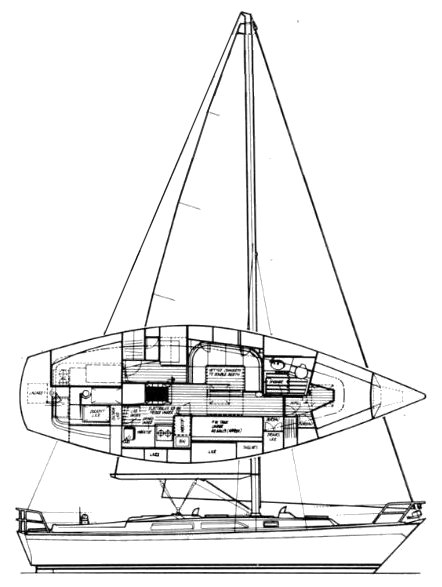
Oyster 37 Heritage
Oyster Marine
0.5 m shorter, similar displacement · Compare
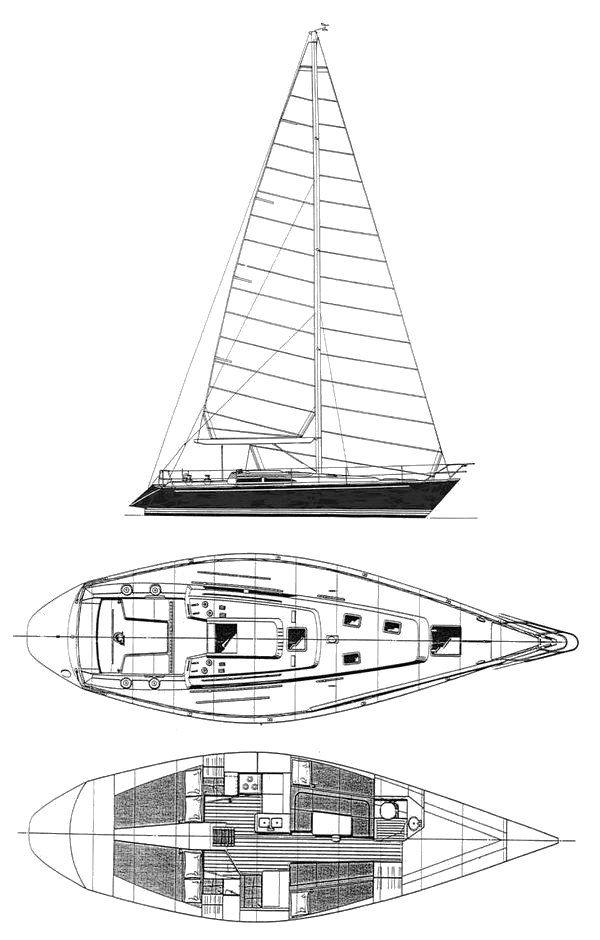
Northeast 39
C&C Yachts/Bruckmann Custom Yachts
0.2 m longer, 2% heavier · Compare
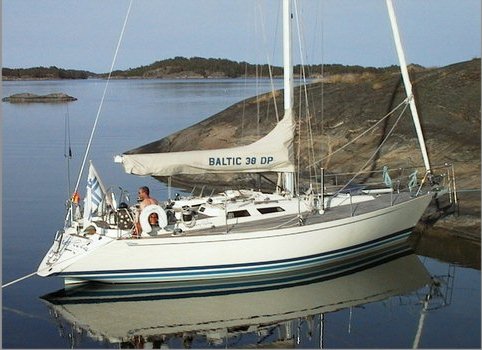
Baltic 38 Dp
Baltic Yachts
0.2 m shorter, 2% lighter · Compare
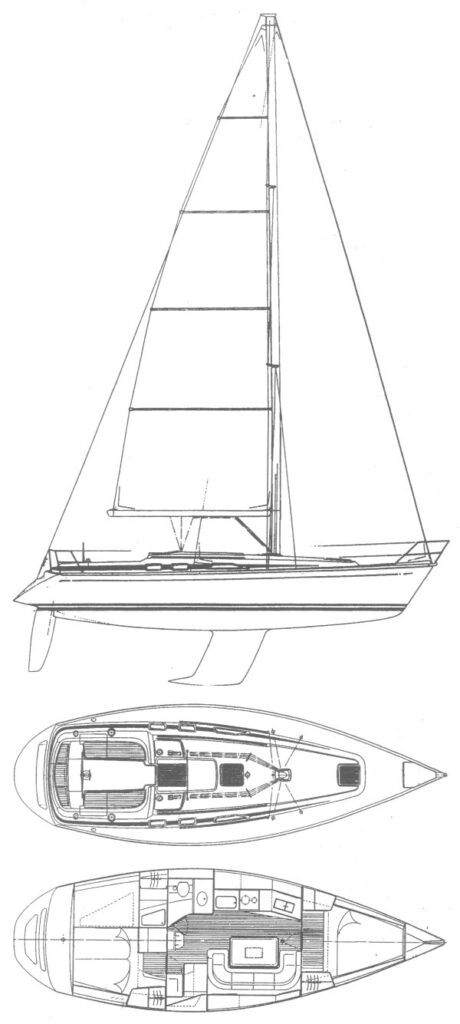
Grand Soleil 37 (J&J)
Cantiere Del Pardo
0.2 m shorter, 3% lighter · Compare
Improve this page: add photos, a price or your experience
Sign in to upload photos of this yacht.
Know what one sold for? Sign in to add a price →
Own or sailed one? Share your experience →