Pearson 39-2 vs Voyager 38 (Trident)
Compare up to 4 boats side by side.
On the numbers
Next to the Pearson 39-2, the Voyager 38 (Trident) is 0.4 m shorter and of similar displacement. The Pearson 39-2 has the higher D/L (246, moderate), the Voyager 38 (Trident) the lower (244, moderate). The Pearson 39-2 has the higher Comfort ratio (26.9, coastal cruiser), the Voyager 38 (Trident) the lower (25.6, coastal cruiser). The Voyager 38 (Trident) has the higher Capsize screening (2.03, above the guideline), the Pearson 39-2 the lower (1.94, meets the common offshore guideline).
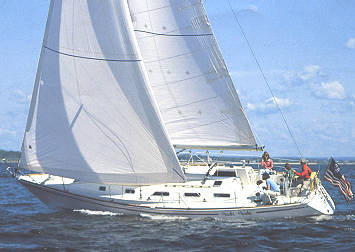 Pearson 39-2 |
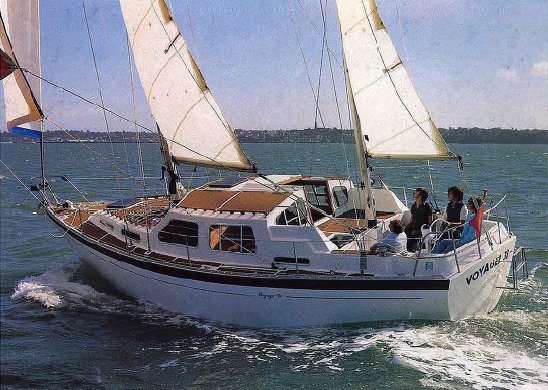 Voyager 38 (Trident) |
|
|---|---|---|
| General | ||
| Builder | Pearson Yachts | Trident Marine |
| Designer | William Shaw | Angus Primrose |
| Hull type | Fin w/spade rudder | Fin Keel |
| Rigging | Masthead Sloop | Masthead Ketch |
| Construction | FG | FG |
| First built | 1986 | 1982 |
| Last built | 1991 | – |
| Dimensions | ||
| Length overall | 11.96 m ▲ | 11.58 m ▼ |
| Waterline length | 9.53 m ▼ | 9.55 m ▲ |
| Beam | 3.79 m ▼ | 3.96 m ▲ |
| Draft (max) | 2.08 m ▲ | 1.52 m ▼ |
| Weight & ballast | ||
| Displacement | 7,620 kg | 7,620 kg |
| Ballast | 3,084 kg ▲ | 2,957 kg ▼ |
| Ballast type | Lead | – |
| Sail plan | ||
| Sail area | 68.87 m² | – |
| Mainsail | 29.43 m² | – |
| Foresail | 39.44 m² | – |
| Engine & tanks | ||
| Engine make | Westerbeke | Mercedes-Benz |
| Engine power | 46 HP ▲ | 42 HP ▼ |
| Fuel | 114 L ▼ | 227 L ▲ |
| Water | 379 L | 379 L |
| Ratios | ||
| SA/D | 18.2 moderate | – |
| D/L | 246 ▲ moderate | 244 ▼ moderate |
| Ballast/Disp | 40.5% ▲ high | 38.8% ▼ moderate |
| Comfort ratio | 26.9 ▲ coastal cruiser | 25.6 ▼ coastal cruiser |
| Capsize screening | 1.94 ▼ meets the common offshore guideline | 2.03 ▲ above the guideline |
| S-number | 2.3 | – |
| Hull speed | 7.49 kn ▼ | 7.50 kn ▲ |
▲ highest and ▼ lowest value in each row. Ratio bands as on the yacht pages; – means the value is not in the catalogue.