Pearson 303 vs Pt-30-2 (Plas Trend 30-2)
Compare up to 4 boats side by side.
On the numbers
Next to the Pearson 303, the Pt-30-2 (Plas Trend 30-2) is 0.1 m shorter and 1% lighter. The Pt-30-2 (Plas Trend 30-2) has the higher SA/D (16.4, moderate), the Pearson 303 the lower (15.8, under-canvassed). The Pt-30-2 (Plas Trend 30-2) has the higher D/L (277, heavy), the Pearson 303 the lower (276, heavy). The Pt-30-2 (Plas Trend 30-2) has the higher Comfort ratio (27.9, coastal cruiser), the Pearson 303 the lower (24.1, coastal cruiser). The Pearson 303 has the higher Capsize screening (2.02, above the guideline), the Pt-30-2 (Plas Trend 30-2) the lower (1.81, meets the common offshore guideline).
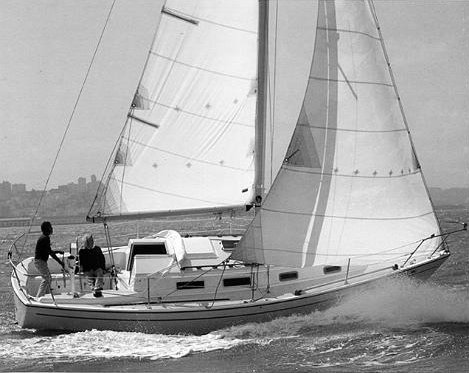 Pearson 303 |
Pt-30-2 (Plas Trend 30-2) | |
|---|---|---|
| General | ||
| Builder | Pearson Yachts | Plas Trend Boats |
| Designer | William Shaw | Britton Chance |
| Hull type | Fin with rudder on skeg | Fin with rudder on skeg |
| Rigging | Masthead Sloop | Masthead Sloop |
| Construction | FRP w/balsa core bottom/solid topsides | FG |
| First built | 1983 | 1970 |
| Last built | 1986 | 1973 |
| Dimensions | ||
| Length overall | 9.23 m ▲ | 9.14 m ▼ |
| Waterline length | 7.73 m ▲ | 7.70 m ▼ |
| Beam | 3.33 m ▲ | 2.97 m ▼ |
| Draft (max) | 1.32 m ▼ | 1.60 m ▲ |
| Headroom | 1.91 m | – |
| Weight & ballast | ||
| Displacement | 4,581 kg ▲ | 4,536 kg ▼ |
| Ballast | 1,588 kg ▼ | 2,404 kg ▲ |
| Ballast type | Lead | Lead |
| Sail plan | ||
| Sail area | 42.61 m² ▼ | 44.09 m² ▲ |
| Mainsail | 17.46 m² ▼ | 18.06 m² ▲ |
| Foresail | 25.15 m² ▼ | 26.03 m² ▲ |
| Engine & tanks | ||
| Engine make | Yanmar | – |
| Engine power | 13 HP | – |
| Fuel | 83 L | – |
| Water | 151 L | – |
| Ratios | ||
| SA/D | 15.8 ▼ under-canvassed | 16.4 ▲ moderate |
| D/L | 276 ▼ heavy | 277 ▲ heavy |
| Ballast/Disp | 34.7% ▼ low | 53.0% ▲ high |
| Comfort ratio | 24.1 ▼ coastal cruiser | 27.9 ▲ coastal cruiser |
| Capsize screening | 2.02 ▲ above the guideline | 1.81 ▼ meets the common offshore guideline |
| S-number | 1.8 ▼ | 1.9 ▲ |
| Hull speed | 6.75 kn ▲ | 6.73 kn ▼ |
▲ highest and ▼ lowest value in each row. Ratio bands as on the yacht pages; – means the value is not in the catalogue.