Elite 30 vs Farr 1/2 Ton (#65)
Compare up to 4 boats side by side.
On the numbers
Next to the Elite 30, the Farr 1/2 Ton (#65) is 0.1 m longer and 10% lighter. The Farr 1/2 Ton (#65) has the higher SA/D (21.5, lively), the Elite 30 the lower (20.5, lively). The Elite 30 has the higher D/L (170, light), the Farr 1/2 Ton (#65) the lower (168, light). The Elite 30 has the higher Comfort ratio (14.0, lightweight racing), the Farr 1/2 Ton (#65) the lower (12.7, lightweight racing). The Farr 1/2 Ton (#65) has the higher Capsize screening (2.51, above the guideline), the Elite 30 the lower (2.42, above the guideline).
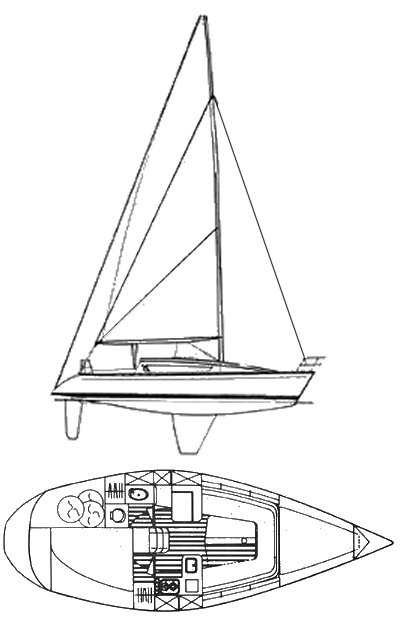 Elite 30 |
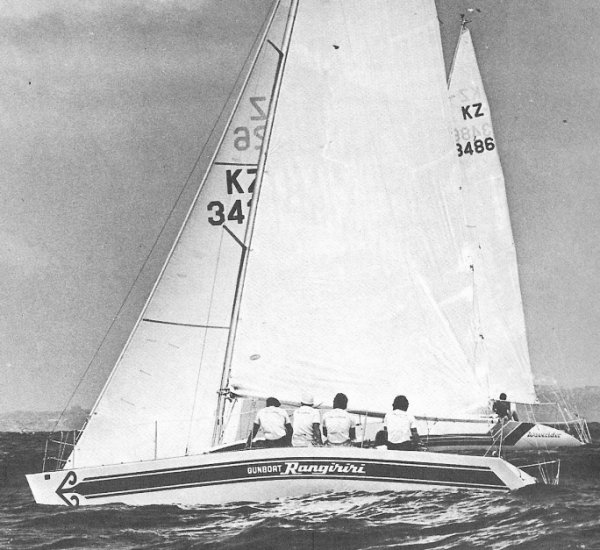 Farr 1/2 Ton (#65) |
|
|---|---|---|
| General | ||
| Builder | Kirie | – |
| Designer | Philippe Briand Yacht Design | Bruce Farr |
| Hull type | Fin w/spade rudder | Lifting Keel |
| Rigging | Fractional Sloop | Fractional Sloop |
| Construction | FG | FG w/kevlar |
| First built | 1984 | 1976 |
| Last built | 1990 | – |
| Number built | 300 | – |
| Dimensions | ||
| Length overall | 9.45 m ▼ | 9.53 m ▲ |
| Waterline length | 7.52 m ▲ | 7.29 m ▼ |
| Beam | 3.30 m | 3.30 m |
| Draft (max) | 1.70 m ▼ | 2.03 m ▲ |
| Draft (min) | – | 0.61 m |
| Weight & ballast | ||
| Displacement | 2,600 kg ▲ | 2,331 kg ▼ |
| Ballast | 1,075 kg ▼ | 1,134 kg ▲ |
| Ballast type | – | Lead |
| Sail plan | ||
| Sail area | 38.09 m² ▲ | 37.10 m² ▼ |
| Mainsail | 23.08 m² ▼ | 23.90 m² ▲ |
| Foresail | 15.01 m² ▲ | 13.21 m² ▼ |
| Engine & tanks | ||
| Engine make | Volvo | – |
| Engine power | 9 HP | – |
| Fuel | 57 L | – |
| Water | 114 L | – |
| Ratios | ||
| SA/D | 20.5 ▼ lively | 21.5 ▲ lively |
| D/L | 170 ▲ light | 168 ▼ light |
| Ballast/Disp | 41.4% ▼ high | 48.7% ▲ high |
| Comfort ratio | 14.0 ▲ lightweight racing | 12.7 ▼ lightweight racing |
| Capsize screening | 2.42 ▼ above the guideline | 2.51 ▲ above the guideline |
| S-number | 3.5 ▼ | 3.7 ▲ |
| Hull speed | 6.66 kn ▲ | 6.55 kn ▼ |
▲ highest and ▼ lowest value in each row. Ratio bands as on the yacht pages; – means the value is not in the catalogue.