Burns 30 vs Royal Cape One-Design (Rcod)
Compare up to 4 boats side by side.
On the numbers
Next to the Burns 30, the Royal Cape One-Design (Rcod) is 0.1 m shorter and 9% heavier. The Burns 30 has the higher D/L (87, ultralight), the Royal Cape One-Design (Rcod) the lower (83, ultralight). The Royal Cape One-Design (Rcod) has the higher Comfort ratio (16.4, lightweight racing), the Burns 30 the lower (11.1, lightweight racing). The Burns 30 has the higher Capsize screening (2.32, above the guideline), the Royal Cape One-Design (Rcod) the lower (1.76, meets the common offshore guideline).
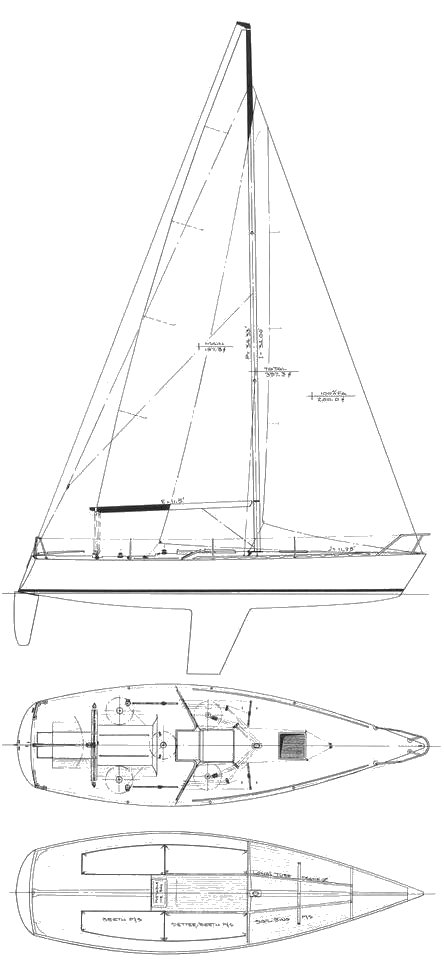 Burns 30 |
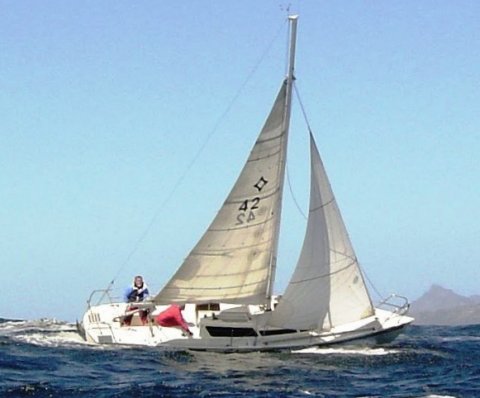 Royal Cape One-Design (Rcod) |
|
|---|---|---|
| General | ||
| Designer | Chuck Burns | E. G. van de Stadt |
| Hull type | Fin w/spade rudder | Fin w/spade rudder |
| Rigging | Fractional Sloop | Fractional Sloop |
| Construction | FG | FG / (Ply)wood |
| First built | 1982 | 1961 |
| Dimensions | ||
| Length overall | 9.14 m ▲ | 9.07 m ▼ |
| Waterline length | 8.13 m ▼ | 8.50 m ▲ |
| Beam | 2.73 m ▲ | 2.13 m ▼ |
| Draft (max) | 1.73 m ▲ | 1.58 m ▼ |
| Weight & ballast | ||
| Displacement | 1,678 kg ▼ | 1,823 kg ▲ |
| Ballast | 862 kg | – |
| Sail plan | ||
| Sail area | 34.48 m² | – |
| Mainsail | 15.92 m² | – |
| Foresail | 18.56 m² | – |
| Ratios | ||
| SA/D | 24.9 high-powered | – |
| D/L | 87 ▲ ultralight | 83 ▼ ultralight |
| Ballast/Disp | 51.4% high | – |
| Comfort ratio | 11.1 ▼ lightweight racing | 16.4 ▲ lightweight racing |
| Capsize screening | 2.32 ▲ above the guideline | 1.76 ▼ meets the common offshore guideline |
| S-number | 5.8 | – |
| Hull speed | 6.92 kn ▼ | 7.08 kn ▲ |
▲ highest and ▼ lowest value in each row. Ratio bands as on the yacht pages; – means the value is not in the catalogue.