Bi-Loup 88 vs Flyer (Pearson)
Compare up to 4 boats side by side.
On the numbers
Next to the Bi-Loup 88, the Flyer (Pearson) is the same length and 1% lighter. The Bi-Loup 88 has the higher D/L (178, light), the Flyer (Pearson) the lower (175, light). The Bi-Loup 88 has the higher Comfort ratio (17.2, lightweight racing), the Flyer (Pearson) the lower (14.6, lightweight racing). The Flyer (Pearson) has the higher Capsize screening (2.42, above the guideline), the Bi-Loup 88 the lower (2.15, above the guideline).
 Bi-Loup 88 |
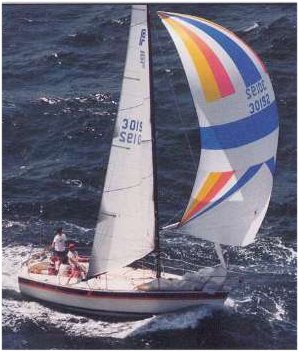 Flyer (Pearson) |
|
|---|---|---|
| General | ||
| Builder | Chantier Wrighton | Pearson Yachts |
| Designer | Richard Wrighton | William Shaw |
| Hull type | Twin Keel | Fin w/transom hung rudder |
| Rigging | Masthead Sloop | Fractional Sloop |
| Construction | FG | FG |
| First built | 1988 | 1981 |
| Last built | 1998 | 1983 |
| Number built | 180 | – |
| Dimensions | ||
| Length overall | 9.10 m ▼ | 9.12 m ▲ |
| Waterline length | 7.60 m ▼ | 7.62 m ▲ |
| Beam | 3.00 m ▼ | 3.38 m ▲ |
| Draft (max) | 1.00 m ▼ | 1.75 m ▲ |
| Headroom | 1.80 m | – |
| Weight & ballast | ||
| Displacement | 2,800 kg ▲ | 2,783 kg ▼ |
| Ballast | 1,000 kg ▼ | 1,225 kg ▲ |
| Sail plan | ||
| Sail area | – | 42.43 m² |
| Mainsail | – | 25.49 m² |
| Foresail | – | 16.94 m² |
| Engine & tanks | ||
| Engine make | – | BMW |
| Engine power | 15 HP ▲ | 8 HP ▼ |
| Ratios | ||
| SA/D | – | 21.9 lively |
| D/L | 178 ▲ light | 175 ▼ light |
| Ballast/Disp | 35.7% ▼ moderate | 44.0% ▲ high |
| Comfort ratio | 17.2 ▲ lightweight racing | 14.6 ▼ lightweight racing |
| Capsize screening | 2.15 ▼ above the guideline | 2.42 ▲ above the guideline |
| S-number | – | 3.6 |
| Hull speed | 6.69 kn ▼ | 6.70 kn ▲ |
▲ highest and ▼ lowest value in each row. Ratio bands as on the yacht pages; – means the value is not in the catalogue.